Author: Zhou

  • High Voltage Arresters: Guardians of the Electrical Grid

    High Voltage Arresters: Guardians of the Electrical Grid

    Load Break Disconnects: Purpose and Operation

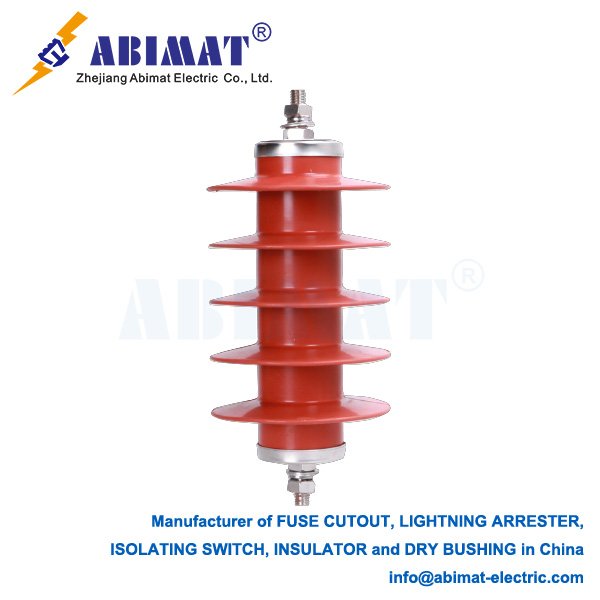
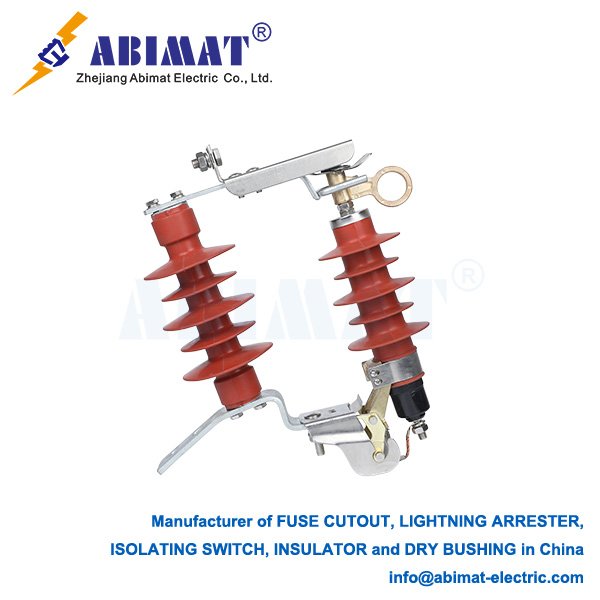
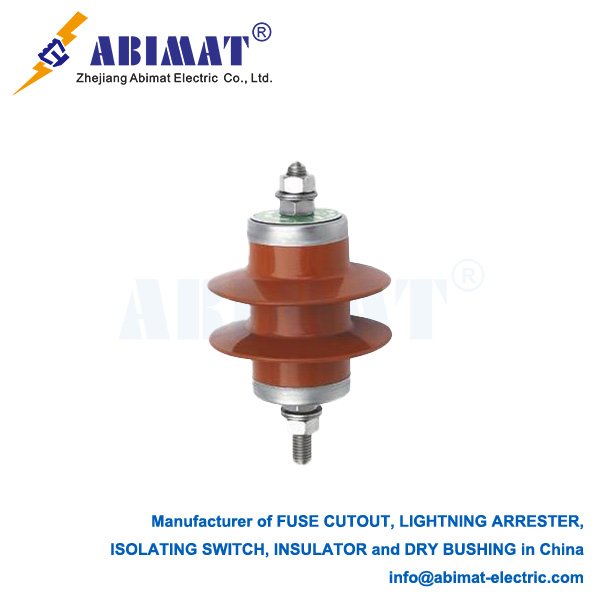
      High voltage arresters are key protective devices in electrical power systems. They shield equipment from harmful overvoltages, with most of these overvoltages coming from lightning strikes or switching surges. Their role is to limit temporary voltages to safe levels—they do this by diverting surge currents to the ground, a step that keeps the system reliable and ensures power supply continues.

    Operating Principle

      Modern high voltage arresters have a core component: the metal-oxide varistor (MOV), typically crafted from zinc oxide (ZnO) discs. These discs have highly nonlinear voltage-current characteristics.

      When the system runs normally, the arrester has very high impedance. Only a tiny leakage current—just a few microamps—flows through it. But when a temporary overvoltage strikes—one that exceeds the system’s protection level—the MOV’s resistance drops rapidly, taking only nanoseconds. This creates a low-impedance path to the ground, so surge energy drains safely. Once the overvoltage fades, the arrester quickly returns to its high-impedance state, and the system goes back to normal operation.
    Key Types and Construction

    Two main types are widely used in high voltage setups.

    First is station-class arresters. These devices protect critical, high-value equipment: power transformers and circuit breakers in substations. They perform well—they absorb more energy and have low residual voltage (that’s the voltage measured when current discharges).

    The other type is line-class arresters. We mount them directly on transmission and distribution lines. They reduce flashovers caused by lightning and prevent faults from occurring.

    Modern arresters have a housing, made from polymer (silicon rubber) or porcelain. Polymer-housed arresters are lighter, handle pollution better, and resist damage. We seal the internal MOV discs tightly inside the housing; this keeps moisture out, a factor that’s vital for long-term performance.

    Critical Parameters and Standards

      When we choose an arrester, we need to check key parameters.

      One key parameter is rated voltage (Ur). It’s the highest power-frequency voltage the arrester can handle after surge discharge without breaking down.

      Another is continuous operating voltage (Uc): it’s the highest continuous power-frequency voltage we can apply to the arrester without damaging its performance.

      Nominal discharge current (In) matters too—it’s the peak value of the current wave used to classify the arrester, like 5kA or 10kA.

      Residual voltage (Ures) is also important. It’s the voltage across the arrester when it discharges the nominal current. Lower residual voltage means the arrester offers better protection.

      Design and testing adhere to international standards, and IEC 60099-4 is a widely used one.

    Applications and Importance

      Arresters are a must in the entire electrical network. We use them on transmission lines—for instance, 230kV or 500kV lines—and distribution systems, such as 33kV setups. They’re the first defense against atmospheric and switching overvoltages.

      By limiting these overvoltages, they stop insulation failure in transformers, circuit breakers, and other equipment, cutting down on device damage and expensive power outages. Modern monitoring systems can track the arrester’s leakage current, providing early alerts if the device starts to degrade.

      In short, abimat high voltage arresters operate quickly and reliably. They’re a fundamental component that makes electrical infrastructure safer, more stable, and longer-lasting.

  • 22kV Drop-Out Fuse: A Critical Component for Distribution System Protection​

    22kV Drop-Out Fuse: A Critical Component for Distribution System Protection​

    22kV Drop-Out Fuse: A Critical Component for Distribution System Protection​

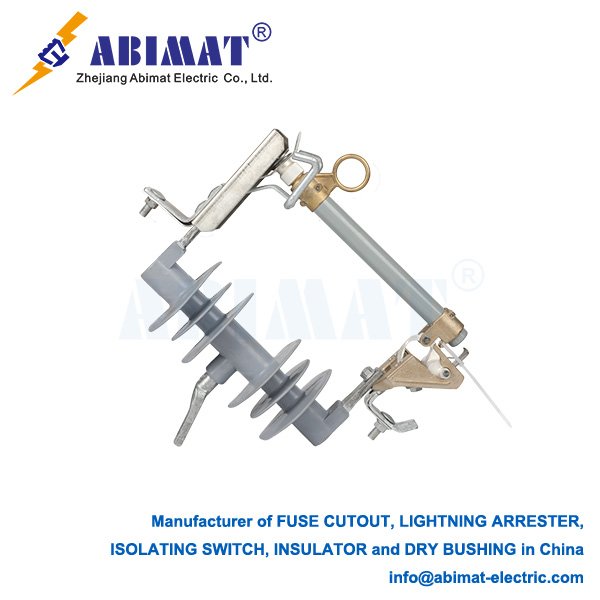
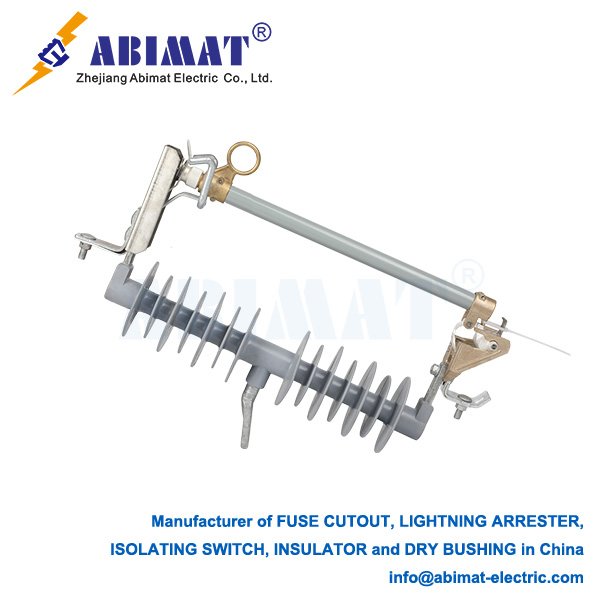
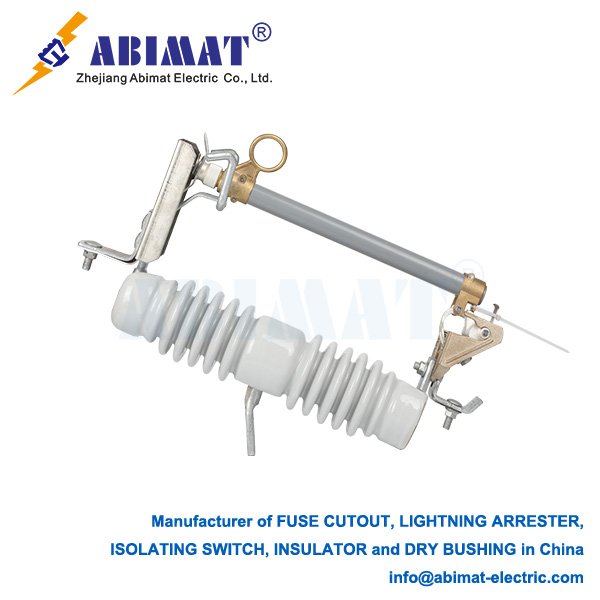
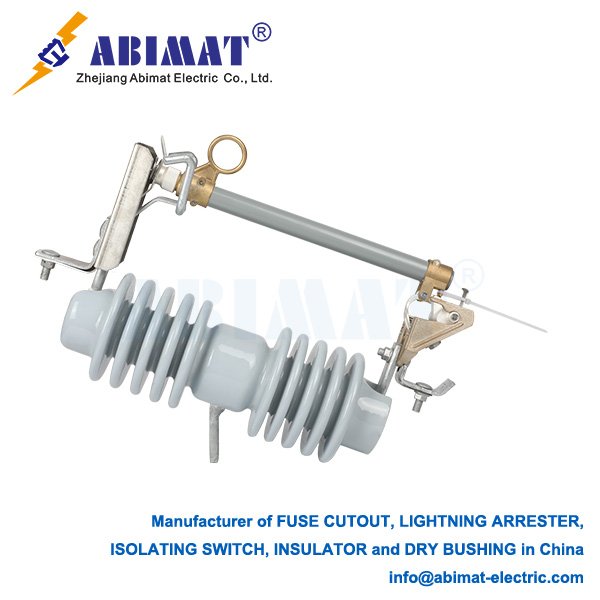
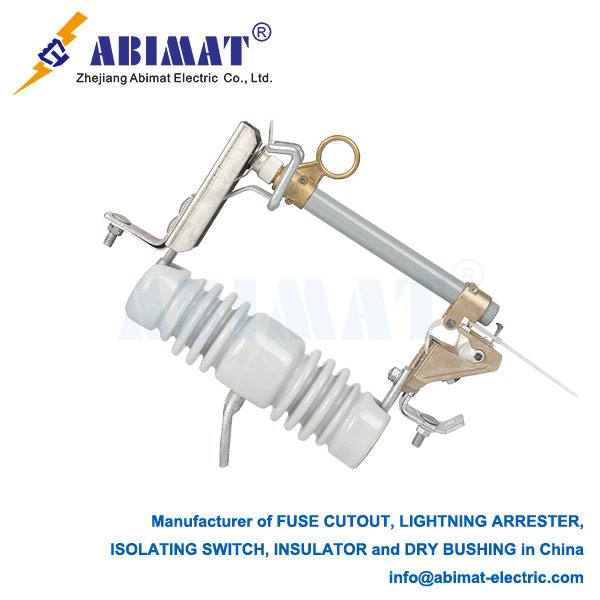
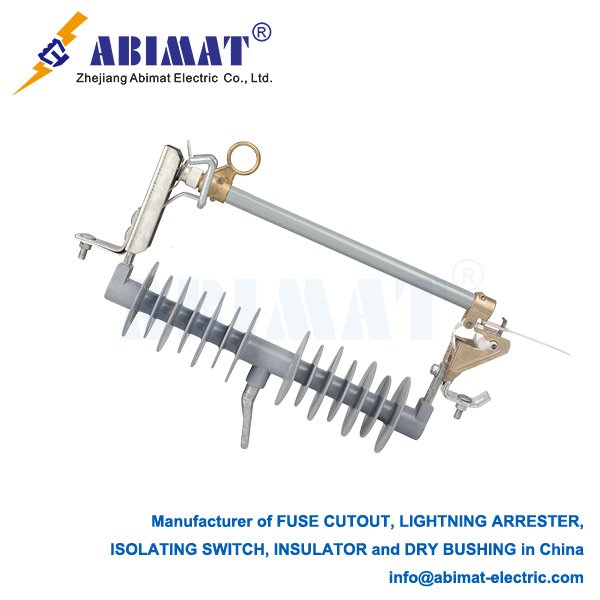
      The 22kV drop-out fuse—people also call it an expulsion-type fuse cutout—is a basic overcurrent protection device. It’s widely used in electrical distribution networks. It works as an affordable and reliable tool to isolate faulty parts of the system. This protects transformers, feeders, and other equipment on medium-voltage systems (up to 22kV).

    Operating Principle and Key Components

    The fuse works because of a simple but useful mechanical design. Its main parts are three types. One is the fuse holder—a removable tube that holds the fusible element. Another is the fuse link; it’s a special calibrated wire or element that melts when too much current flows through it. The third is the hinge assembly, and it lets the fuse holder pivot and drop down once the fuse has operated.

    When the system is under normal load, the fuse link stays intact. This keeps the holder tight and in the closed position. If there’s a long-lasting overcurrent or a short-circuit fault, the fusible element heats up and melts—people call this “blowing” the fuse. When this happens, the tension on the fuse holder is released. Then the holder pivots downward, and this creates a clear, visible break in the circuit. This “drop-out” movement is important. It shows people that the fuse has worked, and it also makes sure there’s enough air insulation between the opened contacts.

    Key Technical Characteristics

    For 22kV systems, these fuses usually have a continuous current rating. It ranges from 40A to 200A. One key parameter is the “minimum breaking current”. You have to match this carefully with the characteristics of the equipment it’s protecting. The fuse link also has a “time-current characteristic (TCC) curve”. You need to choose this curve well. It makes sure the fuse works with the protective devices upstream and downstream. This way, only the faulty part of the circuit is isolated—people call this “selective tripping”.

    Standards and Applications

    When making and testing 22kV drop-out fuses, manufacturers follow international standards. One common standard is IEC 60282-1. These fuses are mainly used to protect distribution transformers, capacitor banks, and feeder branches. They have a big advantage—they can be used as a “fused load-break switch”. This lets workers switch loads manually using an insulated hot stick, which is safe.

    To sum up, the abimat 22kV drop-out fuse is still a key part of protecting distribution systems. It’s simple, reliable, and clearly shows when there’s a fault. To make the system work well and reliably, you need to choose the right fuse. You should look at its rated current, voltage, and TCC curve when choosing.

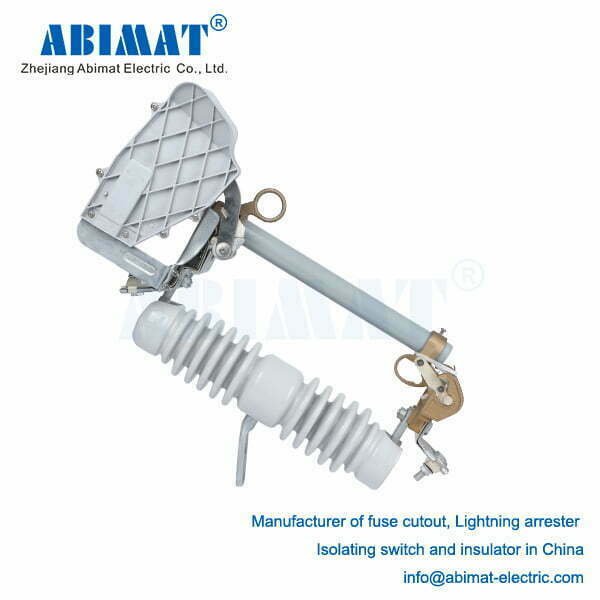
    RW12-15F load break fuse cutout - ABIMAT ELECTRIC
  • Gapless Metal Oxide Surge Arrester (MOA): A Technical Overview

    Gapless Metal Oxide Surge Arrester (MOA): A Technical Overview

    Gapless Metal Oxide Surge Arrester (MOA): A Technical Overview

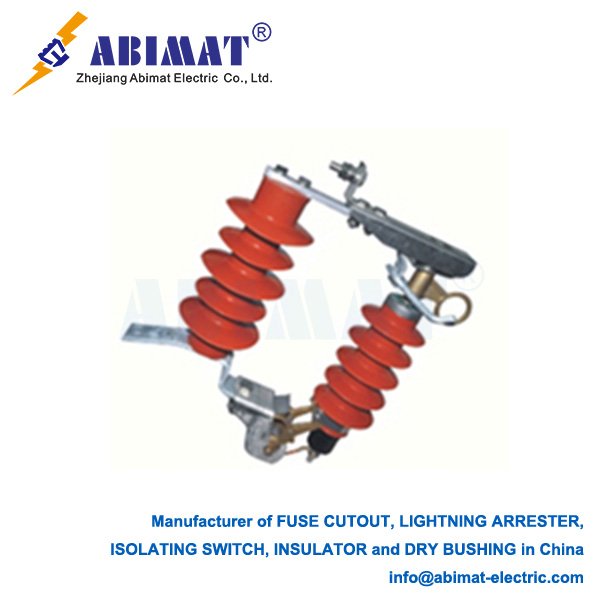
      A Gapless Metal Oxide Surge Arrester (MOA) is an important protective device for electrical power systems. You’ll find it in many places—distribution networks, ultra-high-voltage (UHV) transmission lines, and even high-voltage direct current (HVDC) converter stations. Its main job is to protect equipment that’s sensitive to insulation damage, like transformers and switchgear. It does this by limiting temporary overvoltages—those caused by lightning strikes or switching operations.

      The MOA’s core is a set of zinc oxide (ZnO) resistor discs. People also call these metal oxide varistors (MOVs). These discs have a very non-linear voltage-current trait. When the power system runs at normal voltage, the discs have extremely high resistance—only letting a tiny leakage current flow (usually just microamperes). But if an overvoltage surge hits, their resistance drops a lot in just nanoseconds. This gives a low-resistance path to the ground, steering the surge current away from the equipment we need to protect. The surge’s energy gets absorbed by the ZnO blocks, then spread out as heat. Once the surge is gone, the arrester immediately goes back to its high-resistance state. That lets the power system return to normal.

      Gapless MOAs have some key technical pluses. First, their protective traits are great. They respond quickly, and they stop current smoothly—this means they limit overvoltages really well, holding the voltage close to a safe protective level. Second, they’re stable and reliable. They don’t have series gaps, so there’s no trouble with gap wear, contamination, or wrong sparkover timing. This keeps their performance steady, and it’s especially helpful in dirty environments where series gaps might get damaged. Third, they’re adaptable. They work for lots of different uses—from AC systems to the complex, tough environments of HVDC converter stations.

      When it comes to designing, testing, and using these arresters for AC systems, they follow international standards. One common standard is IEC 60099-4, and there are matching national standards too—like China’s GB 11032-2010. For special uses, such as HVDC systems, specific standards (like IEC 60099-9) give the needed technical guidelines.

      To sum up, the gapless metal oxide surge arrester is a key part of modern electrical system protection. Its strong, gap-free design uses the great traits of metal oxide resistors. This makes sure overvoltage threats are handled reliably and well, which in turn makes power infrastructure safer and more stable.

  • Drop Out Expulsion Fuse: An Overview

    Drop Out Expulsion Fuse: An Overview

    Drop Out Expulsion Fuse: An Overview

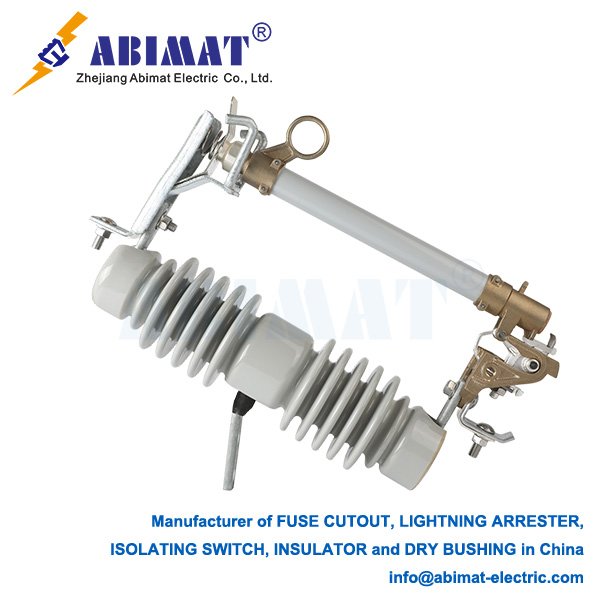
      A drop out expulsion fuse is an important protective device. It’s widely used in overhead electrical distribution systems—usually for systems where voltages go up to 38 kV. Its main jobs are to stop overload currents and fault currents. That way, it protects transformers, capacitors, and parts of power lines from getting damaged. It has a special “drop out” mechanism, too. This mechanism gives a clear, easy-to-see sign that the fuse has worked—and that’s a big advantage for how it operates.

      Now, how does this fuse work? The idea behind it is simple, but it works well. The main part of this fuse is a fuse link. Often, this link is held inside a tube. The tube is made of an insulating material—things like fiberglass or synthetic resin. Inside the tube, there’s a lining of arc-stopping material. Boric acid is one example, or other substances that make gas. The whole setup is mounted on a hinge mechanism. This hinge lets the fuse pivot (swing) when it needs to.

      When the system is working normally (with regular load), the fusible element carries the current without stopping. But if there’s a steady overcurrent or a short-circuit, the element melts—that’s what “fuses” means here. When this happens, an arc starts. That arc makes the lining material break down. As it breaks down, it creates high-pressure gas. This gas stretches the arc and puts it out, which stops the current in the circuit. At the same time, the fusible element has melted, so the mechanical pull on it is gone. That makes the fuse holder swing down on its hinge. It “drops out” into a vertical, open position. This clear visual sign tells you two things: the fuse has worked, and the circuit is cut off.

      This design has some key pluses. First, it works as both a fuse and an isolator—so it does two jobs at once. Second, maintenance teams get a clear visual sign when there’s a fault. And third, it’s cheap to use for utility companies. Another good thing: the expulsion process clears itself. Once the fault is fixed, you can easily reload the fuse to use it again.

      To sum up, the drop out expulsion fuse is still a basic but reliable part for overcurrent protection in medium-voltage distribution networks. People like it because it’s simple, safe, and you can clearly tell how it’s working.

  • Load Break Disconnects: Purpose and Operation

    Load Break Disconnects: Purpose and Operation

    Load Break Disconnects: Purpose and Operation

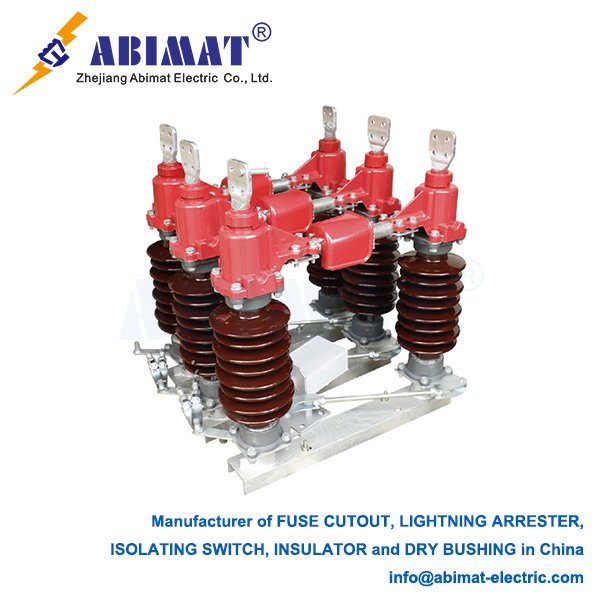
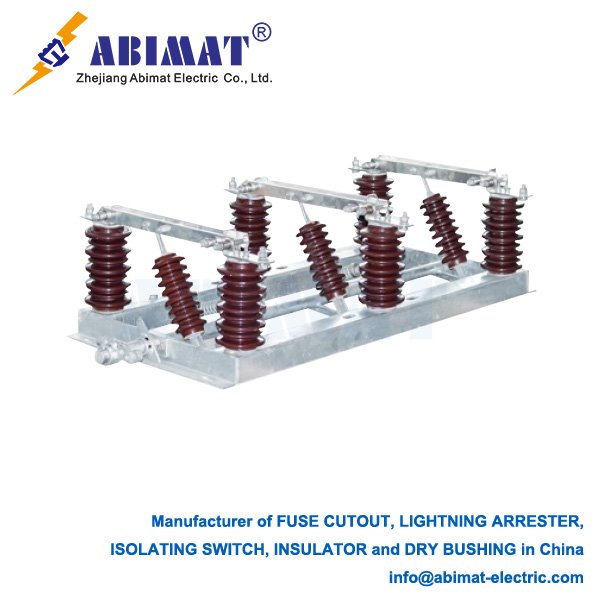
    A load break disconnect (LBD) is an important switching device in medium-voltage electrical distribution systems. It’s made to safely turn load currents on and off when the system runs normally. Its main job is to give a reliable, easy-to-see way to isolate circuits, transformers, capacitor banks, and other equipment—this is for maintenance work or splitting the system into sections, and it makes the system safer while letting you operate it more flexibly.

    Simple isolators or disconnecting switches only work when there’s no load. The LBD is different: it’s made specifically to stop rated load current. It can do this because it has special tech (that stops electrical arcs) inside its chamber for handling arcs. When the contacts pull apart, an electrical arc forms. This arc gets stretched and cooled fast, then goes out—usually because it’s pushed into an arc chute or by de-ionizing gases doing their job.

    Load break disconnects come in two main types:

    Fused Load Break Disconnects: These have current-limiting fuses built right in. They don’t just break load current—they also protect automatically from short-circuit faults. The fuse kicks in when there’s too much current, while the switch’s mechanism takes care of stopping normal load current.

    Non-Fused Load Break Disconnects: These only work as switching tools. They need an outside protection system—like a circuit breaker—to deal with fault currents.

    Important things for an LBD’s work include its rated voltage, how much current it can carry nonstop, and its rated load break current. One big safety feature is the easy-to-see isolation gap: when the switch is in the “open” position, there’s a real air gap. This lets you be sure the circuit downstream is off, so maintenance can be done safely.

    All in all, the abimat load break disconnect is a part you can’t do without to manage electrical power networks safely and well. It fills the space between a simple isolator and a circuit breaker with full capacity.

  • Line Post Type Insulators: A Critical Component in Electrical Systems​

    Line Post Type Insulators: A Critical Component in Electrical Systems​

    Line Post Type Insulators: A Critical Component in Electrical Systems​

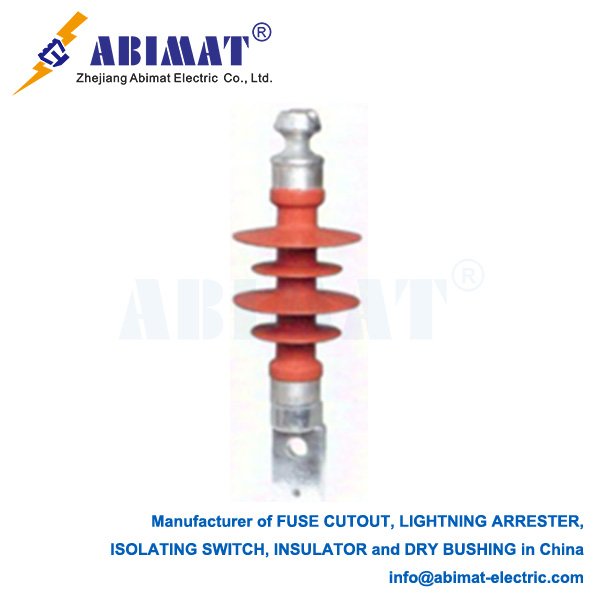
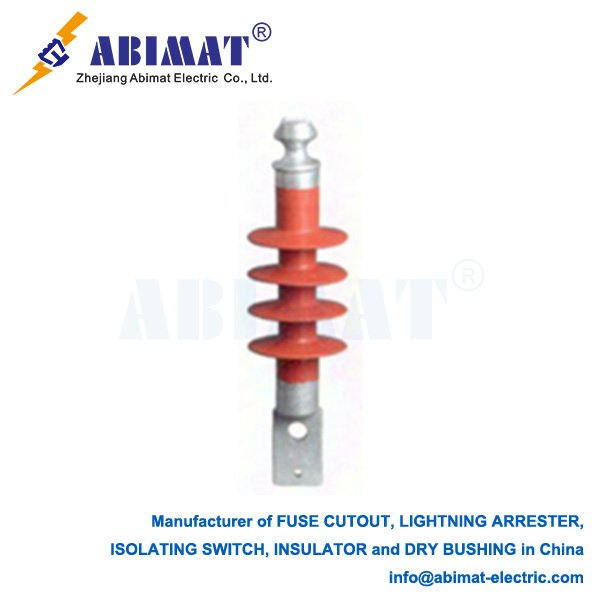
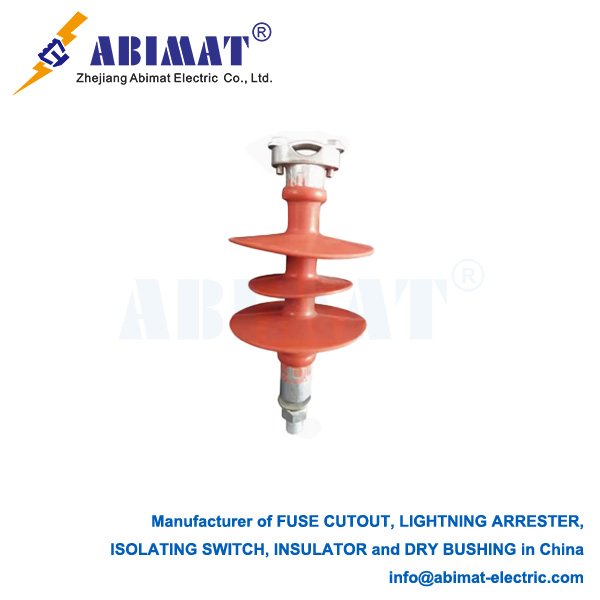
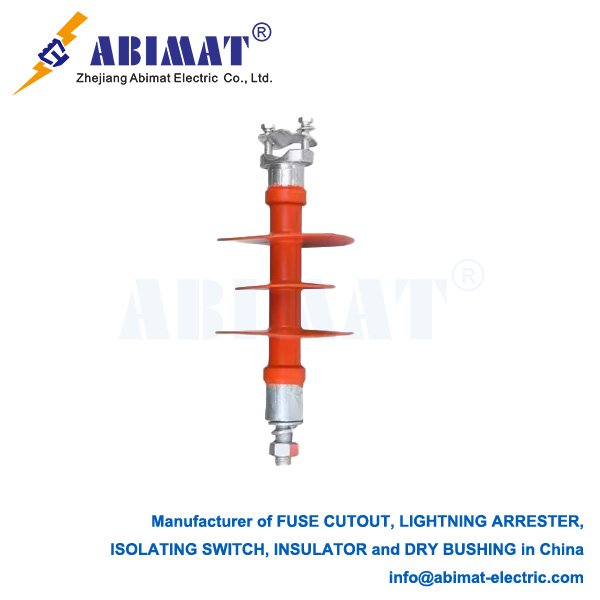
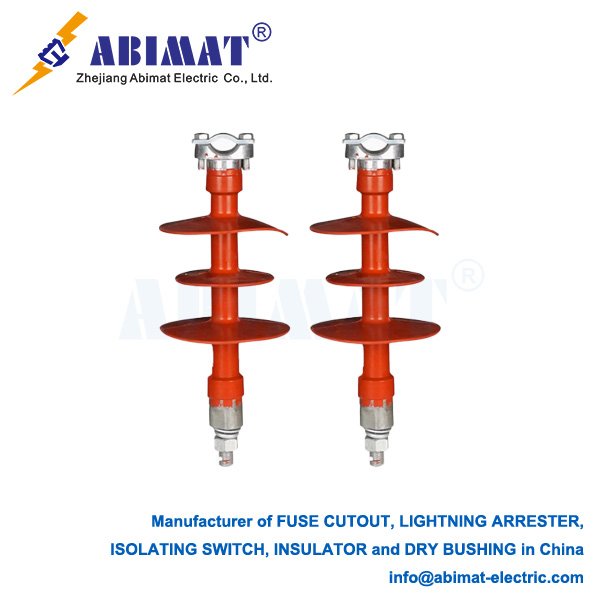
    A line post type insulator is a stiff, upright insulator. It’s mainly used in electrical substations and on distribution lines—its job is to support live electrical conductors, keep them isolated, and give them mechanical strength. Unlike suspension insulators (those hang below the cross-arm), line post insulators sit right on top of the structure. They work well for medium to high voltage setups, and they’re small but strong.​

    Construction and Materials​

    These insulators usually have a central core. The core is made of fibrous material—like resin-soaked glass—and it’s really good at withstanding pulling forces.​
    This core is inside a weatherproof cover. The cover is made of polymer (like silicone rubber) or porcelain. The polymer cover has “sheds”—those are ribs or little bumps. They’re made to make the creepage distance longer. Creepage distance is the path along the insulator’s surface. It goes from the live conductor to the grounded base. This path is really important—it stops flashovers, especially when it’s dirty or wet.

    Key Functions and Advantages​

    The main job of a line post insulator is to hold up the live conductor. At the same time, it keeps the conductor electrically separate from the grounded support—like a pole or tower.​
    They have strong mechanical strength. They’re made to handle big bending forces—these forces come from the conductor’s weight, wind, and ice piling up.​
    They save space too. They stand straight up, so they need less room than strings of suspension insulators. That makes them perfect for small substations.​
    They’re hard to damage on purpose. They’re stiff and made in one piece—this is true especially for polymer ones. They can handle hits from things like rocks better than string insulators.​
    They work well even when dirty. Polymer insulators are good at this—they don’t soak up water. Water forms little beads and rolls off them. This helps keep their insulation working even in dirty places.

    Applications​

    Line post insulators are everywhere in electrical networks. They’re the usual choice for a few key jobs: They hold up busbars inside substations. They end medium-voltage distribution lines. They support and insulate dead-end structures. They act as risers on pole-mounted transformers.​
    All in all, the line post type insulator is a basic but important part. It makes sure modern power systems run safely, reliably, and well. It does two key things: it gives the necessary mechanical support, and it provides important electrical insulation.
  • Gapless Metal Oxide Surge Arrester: Guardian of Power System Reliability​

    Gapless Metal Oxide Surge Arrester: Guardian of Power System Reliability​

    Gapless Metal Oxide Surge Arrester: Guardian of Power System Reliability​

    The gapless metal oxide surge arrester (MOSA) is a key part in modern electrical systems. It’s made to protect insulation and sensitive equipment from harmful voltage surges—like the ones from lightning strikes and switching operations.

    Operating Principle and Core Component​

    This arrester is different from old-style spark gap arresters. It has a single solid block of zinc oxide (ZnO) discs piled inside a porcelain or polymer housing. The key is the strongly non-linear voltage-current trait of the zinc oxide material.​
    When the system runs at normal voltage, the ZnO valve blocks have very high resistance. Only a tiny bit of leakage current—just microamps—flows through them. That means you can hook it up directly across the equipment it protects, no need for a series spark gap. When a dangerous overvoltage surge happens, the ZnO’s resistance drops fast in nanoseconds. It gives a low-resistance path to the ground, steering the big surge current away from the equipment it’s protecting. Right after it steers the surge away, it goes back to its high-resistance state on its own. This brings the system back to normal.

    Key Advantages​

    Gapless MOSAs have great response speed. Since there’s no spark gap, they respond almost right away to fast-moving surges. This protects modern, sensitive insulation better than older designs.​
    They’re also good at absorbing energy. The ZnO elements can soak up a lot of heat and energy from big surge currents—way more than many other arresters.​
    Their performance stays steady too. When they conduct electricity, the voltage at their connections barely changes. That means they give consistent protection every time.​
    Modern ones with polymer casings are fully sealed and tough, too. They don’t need any maintenance at all while they’re in use—you can just install them and forget about upkeep.​
    And they work automatically. Once the surge is gone, they reset on their own. You don’t have to do anything to stop a follow-up current; they handle that by themselves.

    Applications​

    Abimat gapless MOSAs are used at all voltage levels. They protect low-voltage data lines, and they’re also used in ultra-high-voltage power transmission systems. They’re a must for keeping transformers, circuit breakers, and other important substation gear safe. Their tough, reliable performance makes them the clear standard for overvoltage protection in today’s power networks.

  • 33kV Drop Out Fuse: The Essential Distribution System Protector

    33kV Drop Out Fuse: The Essential Distribution System Protector

    33kV Drop Out Fuse: The Essential Distribution System Protector

    The 33kV drop out fuse is a key self-protecting device. It’s used a lot in electrical distribution networks. It works as a cheap but reliable way to protect transformers, feeders, and other gear from overcurrent on rural and suburban power lines.

    Operating Principle and Key Components

    This device works in a really simple way. Its main part is a fusible element—this sits inside a strong tube. The tube is made of epoxy resin or another material that doesn’t track electricity and can handle bad weather. When the power load is normal, the fusible link keeps the fuse parts tight with mechanical tension. This keeps the fuse in the closed (upright) position.


    If there’s a long-lasting overcurrent or a short-circuit fault, the fusible element gets hot and melts—people call this “blowing.” It stops the circuit right away. This action takes away the mechanical tension. After that, the upper contact hinge loosens. The whole fuse tube then tilts down and swings away from the lower contact. This “drop out” setup creates a clear, easy-to-see air gap. It lets maintenance teams know the circuit is isolated, and it makes operations safer.

    Key Design Features and Advantages

    You can tell at a glance if something’s wrong—when the fuse drops down, that’s a clear sign of a fault. This makes it easier for teams to check power lines and find where the problem is.


    It puts out electric arcs well too. The fuse tube is made to create de-ionizing gases when an arc starts. These gases are controlled, so they put out the arc fast—and that makes stopping the current safe.


    It’s really reliable at protecting against overcurrent, and it acts fast. It keeps distribution transformers safe by separating them from network faults. That stops major damage from happening.


    It also works to isolate parts. After the fuse trips, the clear gap keeps the faulty section separate safely. That lets workers do maintenance and repairs without risk.

    Typical Applications

    The 33kV drop out fuse is mainly used to protect distribution transformers that are mounted on poles. These transformers are usually between 500 kVA and 2 MVA. It’s also often used to protect small feeder branches and capacitor banks. It’s designed to work well outdoors, so it can handle different weather and environmental conditions.
    All in all, the abimat 33kV drop out fuse is still a basic but important part of medium-voltage distribution systems. It’s simple, reliable, and shows faults clearly—these things make it a must-have for power companies around the world. It keeps important electrical infrastructure safe and protected.
  • Disconnecting Switch with Earth (Earthing Switch): A Critical Safety Component

    Disconnecting Switch with Earth (Earthing Switch): A Critical Safety Component

    Indoor Disconnect Switch: A Vital Safety Device

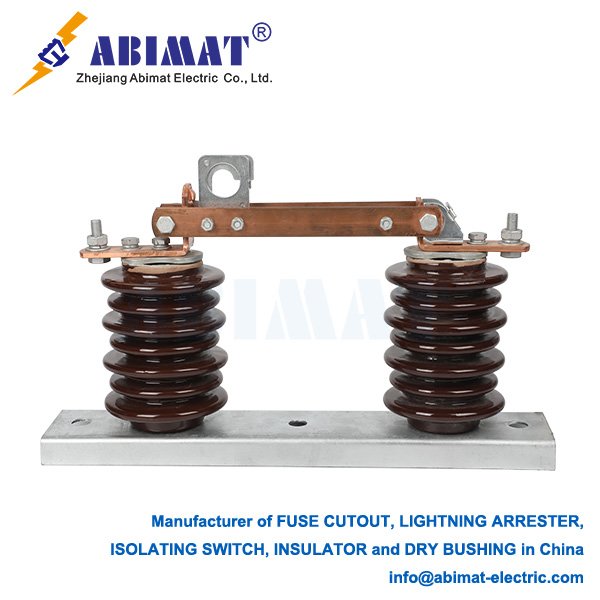
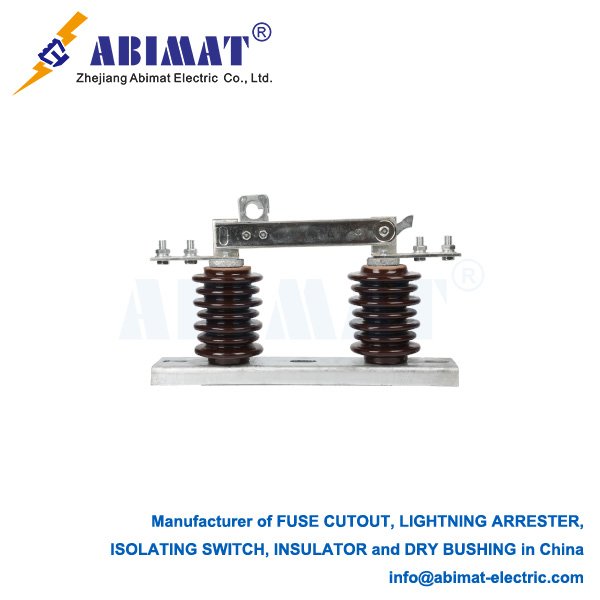
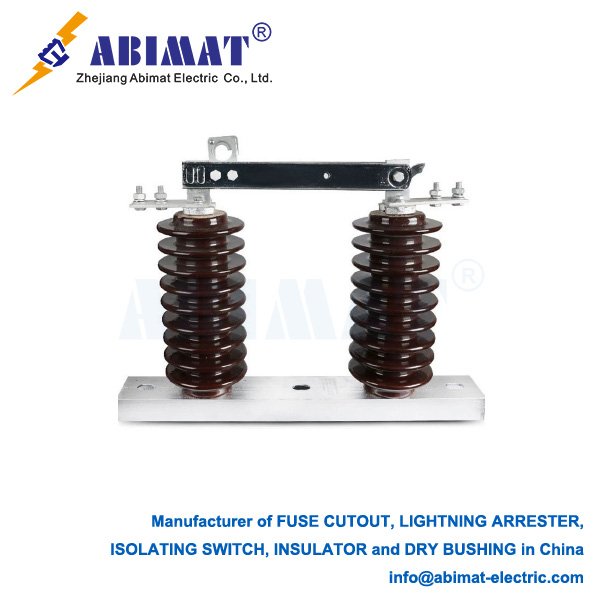
    An indoor disconnect switch is a basic electrical part. It’s made to keep people safe and help control how electricity works. You’ll find it inside buildings. Its main job is to make sure a circuit has no electricity at all—this is needed when you do maintenance, fix something, or shut things down in an emergency.​
    People often call it a safety switch or isolator. It’s not the same as a circuit breaker. Its key job is to separate the circuit, not to protect against too much electricity. When you open it, it makes a clear, reliable “air gap” in the circuit. This physical separation means no electricity can go to the equipment downstream. That protects people from electrical dangers.
    A regular switch has three main parts: a strong case, blades that connect or disconnect the circuit, and a handle on the outside for operation. The handle shows you clearly if the switch is ON or OFF. You can also lock it in the OFF position. This lock feature is important for following safety rules—like LOTO (Lockout/Tagout). It stops the switch from accidentally turning back on while someone is working.
    These switches have specific voltage and current ratings. They match the electrical system they’re used with. You’ll usually see them in commercial and industrial places. They control power to machines, HVAC systems, and lighting panels.
    To sum up, the indoor abimat disconnect switch is simple but you can’t do without it for safety. It’s the essential first step to making a safe place for anyone who works on electrical equipment.
  • Composite Line Post Insulators: A Modern Power Grid Essential

    Composite Line Post Insulators: A Modern Power Grid Essential

    Composite Line Post Insulators: A Modern Power Grid Essential

    Composite line post insulators are key parts in electrical transmission and distribution systems. They hold up live power lines and keep them electrically separate from grounded structures, like utility poles or towers. They are different from traditional porcelain or glass insulators. They are made with advanced polymer materials, and this gives them big advantages in perfor

    A composite line post insulator has two main parts:
    • Core: It is a load-bearing rod. It is made of fiber-reinforced polymer (FRP). This core has great mechanical strength. It can support the weight and tension of the conductors.
    • Housing and Sheds: There is a protective housing and external sheds (these are the “skirts”). They are made from silicone rubber or EPDM rubber. This housing keeps the core safe from the environment. It also gives a hydrophobic (water-repelling) surface.
    This design has key advantages:
    • Lightweight: Composites are much lighter than porcelain. This makes them easier to handle and install. It also reduces the structural load on poles.
    • High Strength-to-Weight Ratio: They have better mechanical strength. This lets them resist mechanical loads well. It also helps them stand up to vandalism.
    • Superior Pollution Performance: The hydrophobic surface makes water form beads and roll off. This stops a continuous conductive water film from forming. Even in dirty or coastal areas, it keeps leakage current low and prevents flashover.
    • Impact Resistance: The polymer housing is stronger against shocks. It can handle damage from impacts—like those during transport, installation, or from flying debris—better than brittle porcelain.

    In short, abimat composite line post insulators make electrical networks more reliable, safer, and more cost-effective. They are light, tough, and work well in polluted conditions. That is why they have become the top choice for modern utility uses all over the world.